
Park History
In 1987, the City bought approximately 40 acres from residents of RIllitoBend to create a park. Initially called the North Central District Park, it was envisioned as a built-out amenity like most of Tucson’s public parks. Neighbors rallied to protect the open desert land. The process was contentious and involved many public meetings where most neighbors argued for an open, natural desert park consistent with the history and values of the surrounding neighborhood. Finally, with testimony from numerous neighbors, local newspaper articles, and editorials supporting the neighbors’ position, the City Council approved what was to become one of Tucson’s first natural resource parks. The initial plan was implemented in 1999 and represented both built-out and natural areas within the Park, a compromise between the City and the residents.
In 2008, Pima County’s General Obligation Bond money of approximately $1.5 million was used to enlarge the grassy area, install restrooms and shade structures, plant/irrigate trees, and improve the egress to the River Park Loop Trail. The Park was dedicated in 2010.
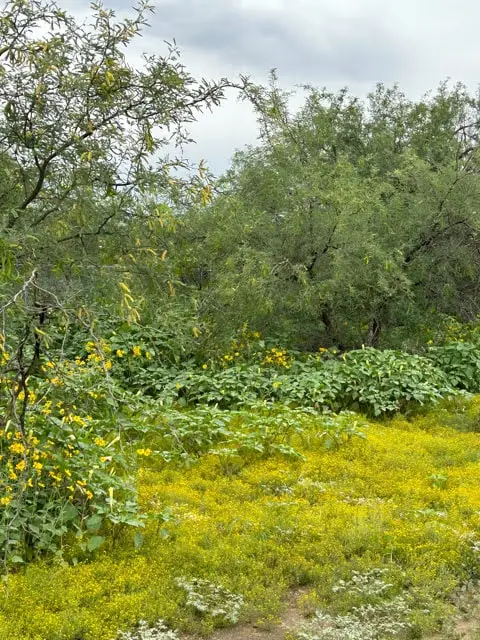
Today, roughly a quarter of the Park has built-out amenities: a playground, picnic tables, grassy field, benches, drinking fountains, a bike rack, and restrooms. The remaining three quarters of the Park are undeveloped: walking paths among mesquite, creosote, and large eucalyptus trees.
Recently, the Park has become prone to “embellishments” such as a Compassion Garden, several memorial benches and more recently a large sculpture—all of which is counter to the original concept. RillitoBend and its neighbors would like to protect the Park from seemingly random additions and miscellaneous built structures unless they speak to the inherent nature of the Park.
How You Can Help Our Park
Stay on the path.
Keep your dog on a leash so it, too, stays on the path.
And clean up after your pet.
These actions will go a long way to preserving our natural resource park. This desert park is in crisis—rogue paths cut across the delicate landscape; the soil is degraded; irrigation lines are broken, and habitats are diminished. We are optimistic that the Master Plan that the City is producing in 2021 will start us on the right path (not rogue!) to protecting and revitalizing our park.
If you want to support the park with weeding, cleaning and other improvements, please contact Estelle Stern-Eilers at rbna@rillitobendna.org.
There are several organizations that support the park with educational programming so consider supporting them.